
How to stand out in a saturated market: Legacy, social media and authenticity with Christina Guthrie

When you look at a highly competitive, heavily regulated industry like the NDIS (National Disability Insurance Scheme), standard business advice tells you to focus on scale, efficiency and aggressive traditional marketing.
When Christina Guthrie launched The Guthrie Collective in Wagga Wagga, she threw that standard playbook out the window.
In episode two of the mint.ed podcast, I had the pleasure of sitting down with Christina to discuss how she built a thriving, highly respected small business in a flooded market, without spending a single dollar on traditional advertising.
Here are the key takeaways from our conversation on how returning to true values, honouring family legacy and using social media authentically can transform a business.
Building a business as a living legacy
Naming a business is often treated as a pure branding exercise. For Christina, it was deeply personal. The Guthrie Collective was named as a tribute to her late father, who passed away in 2014.
Christina’s father lived by a simple, powerful philosophy: "It costs nothing to say hello." Whether speaking to a top hospital oncologist or a room cleaner, he treated every individual with identical respect and kindness.
When launching her business alongside her sister, Kate, Christina grounded the entire organisation’s culture in those exact values. They didn't just write a mission statement, they hired a team that embodied her father's warmth, respect and empathy. When your internal culture is built on real personal values, clients and families notice instantly.
Spotting the gaps in a crowded industry
Before starting The Guthrie Collective, Christina spent over a decade working in the disability sector. As the NDIS rolled out, she observed a shift toward quantity over quality. What she describes as a "bums on seats" approach.
Through direct meetings with participants and their families, she identified a major gap. Young adults with disabilities, particularly those exiting mainstream high schools, were becoming socially isolated. Standard day programs often grouped young people with vastly different age demographics or confined them to centre based activities (like crafting inside a hub) that didn't reflect their age or interests.
Rather than following the crowd, Christina asked a fundamental question: If this were my child, what would I want for them?
Her answer was simple: everyday normal life. Going to local pubs, attending concerts, visiting wineries and enjoying festivals with peers their own age. By focusing on true capacity building, helping participants make genuine, unprompted friendships so they eventually don't need paid support, she created a clear point of difference in her market.
This is a topic I raise often with our clients. You NEED to know your point of difference!
“You’ve got to lead with the heart… your work is a lot of your life.”
Human centric innovation - Ditching the uniforms
One of the most striking decisions Christina made was establishing a strict policy against branded t-shirts, lanyards or uniforms for her team.
While standard business logic views branded shirts as free local advertising, Christina recognised what it meant for the participant. For individuals with hidden disabilities navigating the community, walking alongside a support worker in a bright, branded uniform effectively signals to the public that they are different.
By having her team wear everyday clothes and blend in as friends, sisters or brothers, The Guthrie Collective prioritises genuine community integration over business self promotion. Paradoxically, this commitment to participant dignity created far more positive word of mouth chatter than any branded t-shirt ever could.
Going against a branded uniform contradicts everything I’ve learned over the years about affordable and effective local community marketing. However, in Christina’s case, her reasoning makes perfect sense and I respect her decision.

Mint Agency has always worn branded t-shirts to promote our business in the community but uniforms aren’t right for every company.
Normalising presence through social media
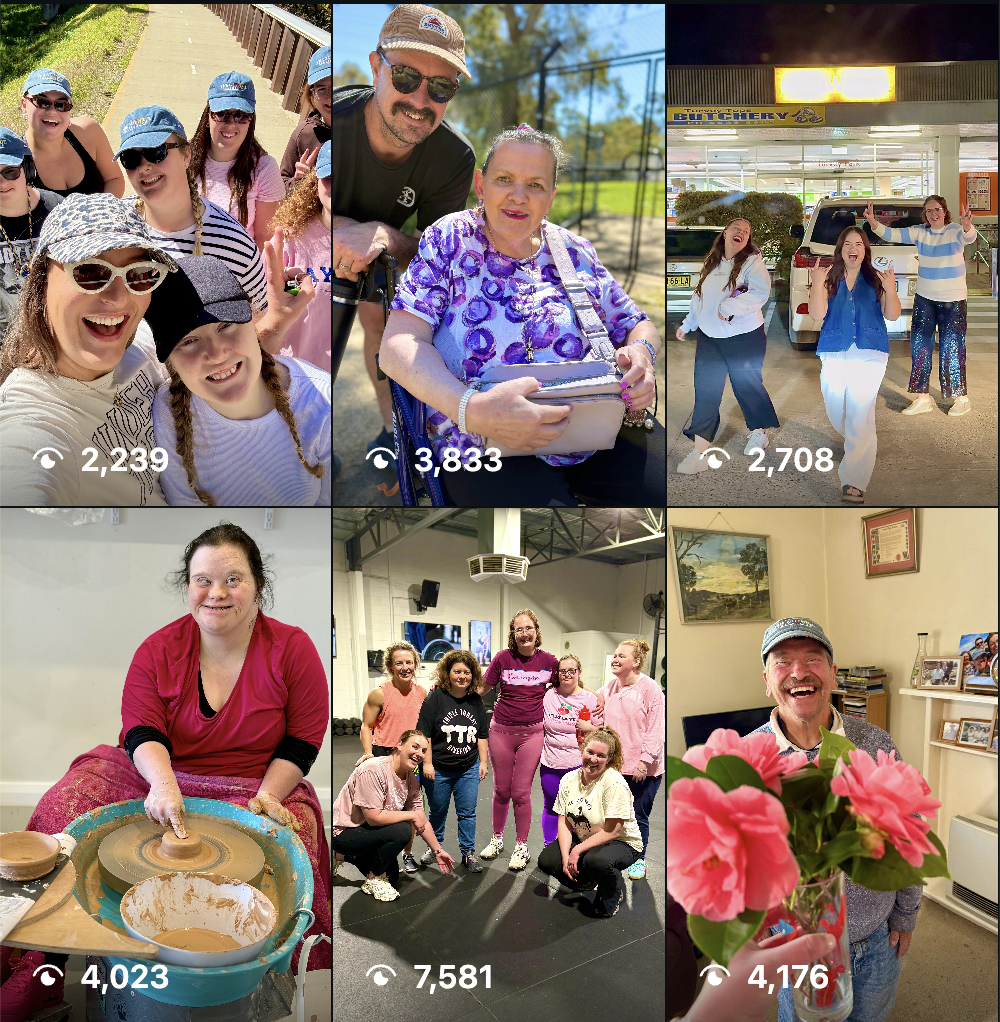
If you follow The Guthrie Collective on social media, you immediately catch the energy. Their channels showcase young adults living full, vibrant lives, dancing at Taylor Swift concerts, enjoying a drink at a local venue and celebrating milestones.
Instead of using social media for sales pitches, Christina uses it to:
Normalise participant presence: Demystifying disability and showing young adults living life to the absolute fullest.
Create joy: Giving families and prospective clients an authentic peek into the high vibe experiences they offer.
Foster community opportunities: The visibility on social channels has even led to local business owners reaching out to offer jobs to participants.
Her social media presence wasn't about showing off polish. It was about shifting industry standards so much that other local providers began upgrading their own activity offerings.
Frequently asked questions (FAQ)
How do you start a business in a competitive or saturated market?
To succeed in a saturated market, identify structural gaps that larger competitors overlook. Focus on hyper personalised service, building deep community relationships and establishing a distinct point of difference rooted in genuine client outcomes rather than pure profit margins.
What is capacity building in the NDIS sector?
Capacity building focuses on equipping NDIS participants with the skills, confidence and social networks needed to achieve independence. True capacity building aims to help participants build real world skills and natural friendships so they eventually require less paid support systems.
How can small businesses leverage word of mouth marketing over paid ads?
Word of mouth marketing relies on relationship building, consistent quality and extraordinary client experiences. By prioritising direct connections with clients and their networks, businesses can drive organic referral pipelines that outperform expensive traditional advertising.
Why is company culture important for service based businesses?
In service based industries, your employees are your primary brand ambassadors. Hiring for alignment in energy, values and empathy ensures that your team delivers consistent customer experiences that reflect your core mission.
Final thoughts
Running a small business while juggling life, family and operational administrative loads is never easy. But as Christina showed us, when you stay deeply connected to why you started, lead with heart and value your team as your greatest asset, you don't just survive in a competitive market, you change it for the better.
Want to listen to our full conversation? Catch episode 2 with Christina Guthrie on the mint.ed podcast via Podbean, Apple Podcasts, Spotify or your favourite podcast app!
“Christina’s father lived by a simple, powerful philosophy: “It costs nothing to say hello.” Whether speaking to a top hospital oncologist or a room cleaner, he treated every individual with identical respect and kindness. ”